
 By
By

What Shoptalk taught us about AI, content and the path to purchase
It’s no surprise that AI and agentic commerce dominated the conversation at Shoptalk Spring in Las Vegas. Every aspect of commerce – from generative product content to chat-based user experience – was on full display at the show.
However, two areas stood out for linking this AI wave with a more, well, human approach.
Repaving the path to purchase
The digital path to purchase used to be a progression of search, browse, research, and checkout behavior. As more platforms and channels emerge, the lines between these behaviors are blurring, and channels like social media often play both a discovery role and a commerce role.
Now, with the advent and growth of Artificial Intelligence, shoppers are rapidly turning to AI from the very beginning of their journey: asking what to buy; receiving a small set of personalized recommendations and making their decisions on a single platform: and leaving only to purchase their chosen item on a retailer or brand . com page.
Nicola Mendelsohn, Head of Global Business Group at Meta, said, “Discovery and commerce are merging seamlessly. AI is not replacing creativity. It amplifies it, making every interaction smarter, more personal, and more connected.”
Although still in its infancy, the potential of AI-driven commerce is plain to see, and it’s getting the backing needed to become a major e-commerce platform. Having existed for less than a decade, the AI-enabled ecommerce market is already expected to reach a valuation of $22.60 billion by 2032.
While the technology is opening new and potentially more convenient doors for shoppers, it has added new layers of complexity for brands and taken away some of their control.
Brand presence is spread across AI platforms, retailers, social channels, website and third-party content. AI pulls from all of these sources at once, which means brand marketers don’t have total control over where your product appears or how it’s described. If a PDP is inaccurate, inaccessible, out of date, or if the product is out of stock, there’s nothing you can do to prevent that listing from being chosen by an AI search engine.
As a result, the most powerful levers left are the quality of what you put out, meaning your data, content and consistency have to be accurate and aligned; and that your future strategies have ‘agent audiences’ in mind.
As mentioned in the Retail in the Age of AI session, “Bad product data isn’t just an inconvenience, it’s a customer experience failure.”
The brands that will conquer the early AI era will be those that align their efforts to how AI answers, not how humans browse.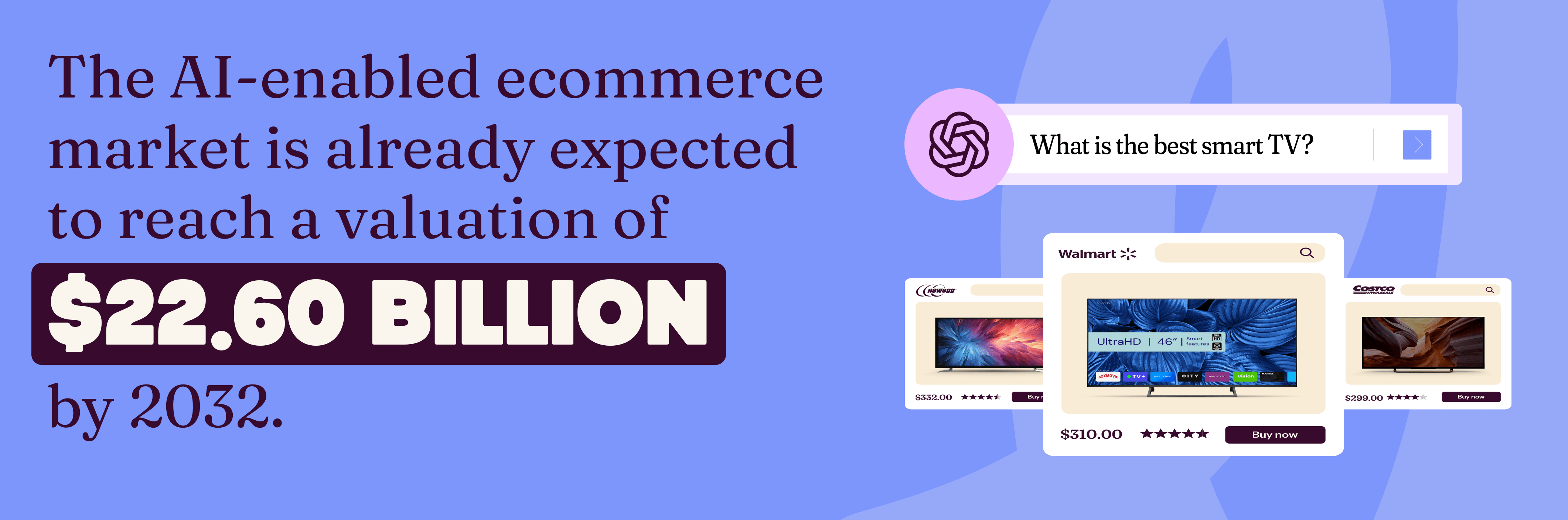
Content is no longer just for customers
Another theme that came through clearly was the redefinition of content strategy.
Product pages were built for humans to skim information. AI interprets information, summarizes it and then recombines it into an answer, rather than a keyword.
The value of ‘human language’ has therefore risen as consumers grow tired of overly tight ‘brand language.’ Content that performs well now tends to be rich in detail, answers real customer questions and is written the way a human would, not in the ‘optimal’ way of doing so that AI or a chatbot would.
That’s one reason why shallow content is losing effectiveness. In its place, more detailed, contextual, and question-led content is becoming key. FAQs, reviews and real customer language answer questions in the same ‘language’ that a human’s question is asked, making them essential to drive conversion, rather than ‘nice-to-haves.’
As mentioned in the session Technologies Transforming Marketing & Advertising, “User-generated content is becoming a primary source of truth for AI.”
Human query-based content now serves as a core input to maximize AI discoverability and provides shoppers with additional information that may convince them to buy your product over your competitor’s.
Wayvia’s role
As AI takes on a larger role in discovery and decision-making, the fundamentals of commerce matter more, not less.
In the next few years, successful brands will be defined by their high data accuracy, retailer connectivity and real-time visibility, all of which would enable them to win a greater share of search in an increasingly AI-influenced shopper journey.
Looking to understand how AI, real-time product data and retailer connectivity fit into your strategy?
Speak with our experts to see what this could mean for your brand.